
0086-15366800998


Battery Materials
Battery-Grade Sodium Fluoride
Domestic product consultation
0086-15366800998
Foreign Trade Hotline
0086-15366800998
Product Details
Product Name : Battery-Grade Sodium Fluoride
Molecular formula: NaF
Chinese aliases: Fluoride ion electrode activity standard solution (100 PPM fluoride); Fluoride ion standard solution for ion chromatography; Sodium fluoride; Sodium fluoride, 99.995% (METALSBASIS EXCLUDINGK); Sodium fluoride for analysis; Sodium fluoride, ACS, 99% low; Sodium fluoride, optical grade
CAS: 7784-18-1
Molecular weight: 41.99
EINECS ID: 231-667-8
Structural formula:
Sodium fluoride is an ionic compound with the molecular formula NaF. At room temperature, it is a colorless crystal or white solid, odorless; its aqueous solution is weakly alkaline, dissolving in hydrofluoric acid to form sodium bifluoride, which can corrode glass. In the battery field, sodium fluoride (NaF) is mainly used as a key sodium source in the synthesis of sodium hexafluorophosphate (NaPF₆), the electrolyte for sodium-ion batteries, requiring a battery-grade purity of over 99.95%. Furthermore, in sodium metal battery research, NaF can be used as an in-situ forming interfacial component to enhance interfacial mechanical properties and regulate sodium deposition.
project | unit | index | result |
Co | ppm | <5 | <1 |
Cr | ppm | <5 | <1 |
Ti | ppm | <5 | <1 |
Cu | ppm | <5 | <1 |
Fe | ppm | 10 | 6.2 |
Mn | ppm | <5 | <1 |
Ni | ppm | <5 | <1 |
V | ppm | <5 | <1 |
Weightlessness due to burning | % | 0.5 | 0.33 |
purity | % | 99.95 | 99.95 |
1. As the core sodium source for the synthesis of sodium hexafluorophosphate, the battery-grade purity needs to reach above 99.95%. Theoretically, each ton of NaPF₆ consumes approximately 0.25 tons of NaF, making it the most certain large-scale application scenario at present.
2. In sodium metal batteries, NaF can be used as an in-situ generated interface component, providing high mechanical strength and low sodium ion diffusion barrier, suppressing dendrite growth, and achieving close contact with alloy phases, resulting in symmetric battery cycles exceeding 5000 hours.
3. As a sacrificial sodium supplement, NaF has a theoretical specific capacity of 638 mAh g⁻¹. It is stable in air and has low cost, but its decomposition potential is high and requires catalytic activation. When combined with MnO, it can significantly improve the first discharge capacity of the full cell.
4. In sodium-carbon fluoride batteries, NaF is an inherent product of discharge. Its dissociation energy is lower than that of LiF, but its reversibility is still limited. By reconstructing it into an amorphous active phase through Cu nanoparticles, the reversible capacity can be increased to over 700 mAh g⁻¹.
5. In lead-acid batteries, NaF has been used as an additive for PbO₂ electrodeposition to improve oxygen evolution potential. There are also patents that mention that it can improve the utilization rate of positive electrode active materials, but these are relatively early exploratory works.
The warehouse should be well-ventilated, kept at a low temperature and dry; it should be stored separately from oxidants and food additives.
1. Woven plastic bags, aluminum foil bags, cardboard drums;
2. We can provide other forms of packaging according to customer needs.
Relative density 2.558 (4 1/4℃), melting point 993℃, boiling point 1695℃[1]. (Relative density 2.79, melting point 992℃, boiling point 1704℃[3]) Soluble in water (15℃, 4.0g/100g; 25℃, 4.3g/100g), soluble in hydrofluoric acid, insoluble in ethanol. Aqueous solution is alkaline (pH=7.4). Toxic (damages the nervous system), LD50 180mg/kg (rat, oral), 5-10g is lethal.
Plant Evironment
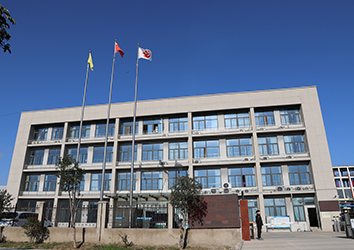
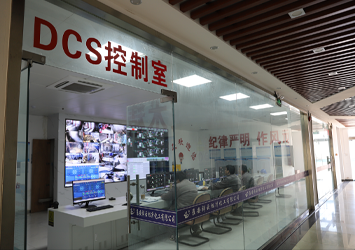
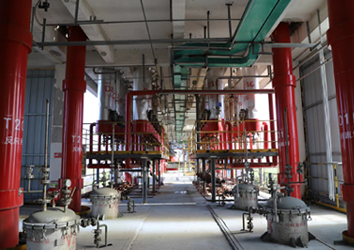
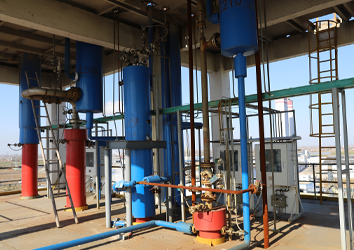


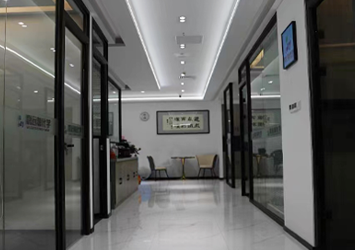
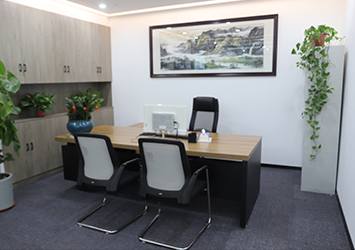
Welcome to establish long-term cooperative relations with our company
Please contact us
0086-15366800998
Domestic Trade Contact:President Yuan
Mobile:0086-15366800998
Email:999yhsen@163.com
Minister of Foreign Trade:Jane
Mobile:0086-0519-15366800998
Email:janeyuan@czjyhg.com
Address:1304, Block B, Jinsha Science and Technology Financial Center, Jintan District, Changzhou City, Jiangsu Province
Tel:0086-15366800998
Fax:0086-0519-82110997
From
2015
Focus on fluorine-containing pharmaceutical&pesticide intermediates
