
0086-15366800998


Battery Materials
Battery-Grade Lithium Fluoride
Domestic product consultation
0086-15366800998
Foreign Trade Hotline
0086-15366800998
Product Details
Product Name: Battery-Grade Lithium Fluoride
Molecular formula: LiF
Chinese alias: Lithium fluoride
CAS: 7789-24-4
EINECS ID: 232-152-0
Molecular weight: 25.94
Structural formula: Li⁺ F⁻
Lithium fluoride is a white powder with a sodium chloride-type crystalline structure. It is slightly soluble in water, sparingly soluble in alcohol and other organic solvents, and readily absorbs moisture. When it comes into contact with water, it hydrolyzes to release hydrogen fluoride (HF), therefore it cannot be stored in glass bottles.
Lithium fluoride (LiF) is mainly used in batteries as a fluorine source for the synthesis of lithium hexafluorophosphate, and it also participates in the construction of the SEI film, as a positive electrode coating layer and electrolyte additive to improve interface stability and cycle life.
project | unit | index | result |
As | ppm | ≤5 | 2.32 |
Zn | ppm | ≤10 | 0.34 |
Ni | ppm | ≤1 | 0.28 |
Fe | ppm | ≤3 | 2.5 |
Pb | ppm | ≤1 | 0.72 |
Mg | ppm | ≤10 | 0.13 |
Ca | ppm | ≤10 | 3.45 |
Al | ppm | ≤10 | 6.78 |
Ba | ppm | ≤10 | 3.72 |
Na | ppm | ≤10 | 2.82 |
K | ppm | ≤10 | 3.25 |
Si | ppm | ≤50 | 22.12 |
Cl | ppm | ≤20 | 10.42 |
SO₄²⁻ | ppm | ≤20 | 12.74 |
H₂O | ppm | ≤200 | 196 |
LiF | % | ≥99.95 | 99.97 |
1. As the core lithium source for synthesizing lithium hexafluorophosphate, battery-grade lithium fluoride needs to have a purity of over 99.95%, which is currently the most certain large-scale application scenario in the lithium battery electrolyte industry chain.
2. In lithium metal battery research, LiF can be used as an in-situ generated inorganic SEI component, providing high mechanical strength and low lithium-ion diffusion barrier, suppressing lithium dendrite growth, and achieving uniform deposition in conjunction with organic components.
3. As a surface coating or dopant for lithium-ion battery cathode materials, LiF can effectively isolate the cathode from direct contact with the electrolyte, reduce transition metal dissolution and interfacial side reactions, and improve cycle stability.
4. As an interface modification material for certain solid-state battery systems, its chemical stability and electrochemical inertness can be used to construct artificial interface layers to match high-voltage or highly active electrodes.
5. In special thermal batteries or molten salt batteries, LiF is often used as a key component of eutectic salt mixtures to broaden the liquid phase temperature range of molten salt electrolytes and improve ionic conductivity.
The warehouse should be well-ventilated, cool, and dry; prevent moisture absorption; store separately from acids, oxidants, and food additives, and never store in glass containers.
1. Woven plastic bags, aluminum foil bags, cardboard drums;
2. We can provide other forms of packaging according to customer needs.
It has a relative density of 2.640, a melting point of 845°C, and a boiling point of 1681°C. It begins to volatilize at 1100–1200°C, and its vapor is alkaline. It is slightly soluble in water (0.29 g/100 mL at 20°C) and sparingly soluble in alcohol and other organic solvents. At room temperature, it is readily soluble in nitric acid and sulfuric acid, but insoluble in hydrochloric acid. It can react with hydrofluoric acid to form Li₂HF acid salts. It is hygroscopic and hydrolyzes in water to form corrosive hydrogen fluoride. It is a toxic substance; ingestion is harmful, and contact releases extremely toxic gases. Appropriate protective clothing is required.
InChI InChI=1/FH.Li/h1H;/q;+1/p-1
InChIKey PQXKHYXIUOZZFA-UHFFFAOYSA-M
density 2.64 g/mL at 25 °C (lit.)
Melting point 845 °C (lit.)
boiling point 1681 °C
Flash point 1680°C
Water-soluble 0.29 g/100 mL (20 ºC)
vapor pressure 0Pa at 25℃
solubility Soluble in 0.29 g/100 mL (20°C) and hydrogen fluoride. Insoluble in alcohol.
Refractive index 1.3915
pH value 6.0-8.5 (25℃, 0.01M in H2O)
Storage conditions Store at +5°C to +30°C.
stability Stable, but hygroscopic. Hydrolyzes in the presence of water to form hydrofluoric acid, which attacks glass - do not store in glass bottles. Incompatible with aqueous solutions, strong acids, strong o
Sensitivity Hygroscopic
Appearance random crystals
proportion 2.635
color White to off-white
Maximum wavelength (λmax) ['λ: 260 nm Amax: ≤0.01',
, 'λ: 280 nm Amax: ≤0.01']
Merck 14,5531
Ksp precipitation equilibrium constant pKsp: 2.74
Exposure limits ACGIH: TWA 2.5 mg/m3NIOSH: IDLH 250 mg/m3; TWA 2.5 mg/m3
Physical and chemical properties Lithium fluoride is a white powder with a sodium chloride-type crystalline structure. It has a relative density of 2.640, a melting point of 848℃, and a boiling point of 1673℃. It begins to volatilize at 1100–1200℃, and its vapor is alkaline. Lithium fluoride is slightly soluble in water and sparingly soluble in alcohol and other organic solvents. At room temperature, lithium fluoride is readily soluble in nitric acid and sulfuric acid, but insoluble in hydrochloric acid. It can react with hydrofluoric acid to form the acid salt Li₂HF.
Product applications: Used as an additive in aluminum electrolysis and rare earth electrolysis, in optical glass manufacturing, as a desiccant, and as a flux.
Dangerous goods signs T - Toxic substances
Toxic substances
Risk terms R25 - Poisonous if ingested.
R32 - Releases highly toxic gases upon contact with acids.
R36/37/38 - Irritating to eyes, respiratory system and skin.
R23/24/25 - Toxic by inhalation, skin contact and ingestion.
Safety terminology S22 - Do not inhale dust.
S26 - If accidentally contacted with eyes, rinse immediately with plenty of water and consult a doctor.
S36/37/39 - Wear appropriate protective clothing, gloves, and goggles or face mask.
S45 - In case of an accident or if you feel unwell, seek medical attention immediately (show the label if possible).
Dangerous goods transport number UN 3288 6.1/PG 3
Plant Evironment
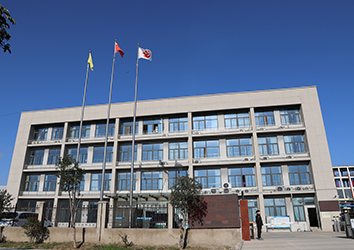
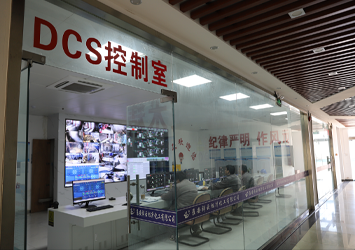
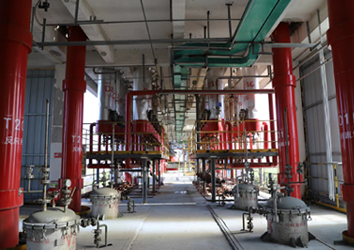
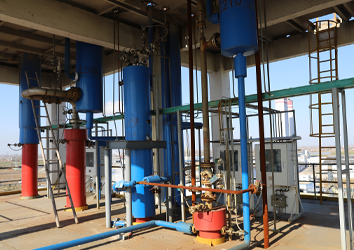


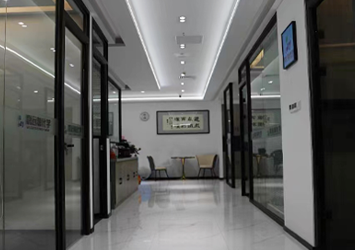

Welcome to establish long-term cooperative relations with our company
Please contact us
0086-15366800998
Domestic Trade Contact:President Yuan
Mobile:0086-15366800998
Email:999yhsen@163.com
Minister of Foreign Trade:Jane
Mobile:0086-0519-15366800998
Email:janeyuan@czjyhg.com
Address:1304, Block B, Jinsha Science and Technology Financial Center, Jintan District, Changzhou City, Jiangsu Province
Tel:0086-15366800998
Fax:0086-0519-82110997
From
2015
Focus on fluorine-containing pharmaceutical&pesticide intermediates
